Introduction
Whether you're dipping your toes into pay-per-click (PPC) advertising or you're an experienced marketer, optimizing your Google Ads for better click-through rates (CTR) is crucial. A high CTR indicates that your ads are relevant and appealing to your audience. It also benefits your campaigns by improving their quality score, leading to reduced costs per click and better ad placements.
Understanding Google Ads Optimization
Importance of optimizing Google Ads
Optimizing Google Ads is crucial for enhancing the performance of your advertising campaigns. By fine-tuning various elements of your ads, you increase the likelihood of reaching your target audience and maximize your return on investment (ROI). Effective optimization leads to higher click-through rates (CTR), indicating that more potential customers engage with your ads. This increases the chances of conversions and improves your ads' quality scores, potentially lowering the cost per click (CPC).
Key metrics to focus on for higher CTR
To achieve a higher CTR, monitoring and adjusting based on specific key metrics is essential. The primary metric to focus on is the CTR, which measures your ads' effectiveness in capturing users’ attention. Additionally, quality score is a crucial metric, as it affects both ad positioning and CPC. Conversion rates also provide insights into how well your ads are performing in terms of leading to actual sales or specified actions. Lastly, keep an eye on the cost per conversion, as this helps you understand the financial efficiency of your campaign.
Keyword Research and Selection
Using relevant keywords
The foundation of a successful Google Ads campaign is built on selecting the appropriate keywords. Keywords should be highly relevant to the products or services you offer. Use tools like Google Keyword Planner to discover the terms your target audience uses to search for similar offerings. Regularly updating and refining your keyword list is vital as trends and user behaviors evolve. Including direct and related keywords in your ad copy and landing pages can significantly enhance relevancy and CTR.
Long-tail keywords for better targeting
Incorporating long-tail keywords into your campaigns can be a game-changer. These are more specific phrases that tend to be longer than three words. They are less competitive, more cost-effective, and attract users with higher purchase intent. For example, instead of targeting “running shoes,” use “women's trail running shoes size 10.” This precision improves the chances of your ad being clicked and increases the likelihood of the click converting.
Negative keywords to reduce wasted ad spend
Negative keywords are crucial in refining your audience and preventing your ads from appearing for unrelated searches. They help avoid wasted ad spend on clicks that are unlikely to convert. For instance, if you're selling luxury watches, adding negative keywords like “cheap” or “discount” can prevent your ads from appearing in search queries. Regularly updating your negative keyword list is as important as adding new keywords to target, ensuring your ad spend is always optimized for the most relevant audience.
Compelling Ad Copy Creation
Creating compelling ad copy is crucial in improving your Google Ads' click-through rates. Your ad copy is the first point of interaction with your target audience, so it needs to grab attention and persuade users to click through to learn more about your offerings.
Writing engaging headlines
Headlines in Google Ads hold tremendous power in attracting viewers. To craft headlines that catch the eye, include your main keyword to improve relevance. Use numbers or questions that provoke curiosity or address specific problems your product or service can solve. Keep it concise but impactful, aiming to stir an emotional response or offer a clear benefit. Testing different headlines can also help identify what resonates best with your audience.
Crafting persuasive ad sales descriptions
In ad descriptions, your goal is to build on the intrigue or promise in the headline. Use this space to highlight key benefits and unique selling propositions that set your product apart. Effective ad descriptions often include a clear call-to-action (CTA), such as ‘Learn More', ‘Get a Free Trial', or ‘Shop Now', guiding users on what to do next. Ensure consistency in messaging between your headline and description to strengthen the overall appeal of the ad.
Ad Extensions for Enhanced Visibility
Ad extensions are features on Google Ads that expand your advertisement to include additional information, giving potential customers more reasons to choose your business. They can dramatically enhance the visibility and appeal of your ads.
Utilizing various ad extensions effectively
Google offers several ad extensions that can be tailored to fit different business needs and campaign goals. These include sitelink extensions, callout extensions, structured snippet extensions, and call extensions. Proper usage involves selecting extensions that align closely with your ad's objective. For instance, location extensions can drive foot traffic to brick-and-mortar stores or call extensions in ads to boost phone inquiries.
Benefits of using ad extensions for CTR improvement
Incorporating ad extensions can enhance your ads' physical size on search results pages, improving visibility and prominence. They provide additional valuable information and interactive elements that can make your ads more appealing to a user. This often leads to higher click-through rates as ads with extensions typically outperform ads without them.
Best practices for ad extension implementation
To maximize the impact of ad extensions, you should ensure that the information provided is relevant to the text of your ads and adds real value for the viewer. Keep the information current, especially for dynamic components like promotions or events. Regularly review the performance of your ad extensions to adjust or replace underperforming ones. Additionally, tailor the extensions used based on the campaign and the specific objectives to ensure they support rather than distract from the main message of your ads.
A/B Testing and Optimization
Importance of continuous testing
To maximize your Google Ads CTR, it's vital to embrace continuous A/B testing. This process involves comparing two versions of your ad to see which performs better, helping you refine your strategies based on empirical data rather than assumptions. Continuous testing optimizes your ad spend and enhances your ads' relevance and impact, ensuring they resonate better with your target audience. It turns your advertising efforts into a dynamic process that evolves with audience preferences and market trends.
Strategies for A/B testing ad elements
Effective A/B testing involves varying specific elements of your ads to determine what drives the best results. Here are some components you can test:
– Headlines: Try different calls to action and phrasing to see which grabs more attention.
– Description: Modify the text to see if a more detailed explanation or a concise bullet point list increases engagement.
Display URL: Include keywords in the URL to test whether this makes your ad more relevant to searchers.
– Images and Videos (for display ads): Test different visuals to evaluate which are more appealing to your audience.
By altering these elements one at a time, you can identify what influences your potential customers' behavior and adjust your tactics accordingly.
Analyzing results for optimization
Once you've conducted your A/B tests, the next step is to analyze the results. This means looking at which version of your ad scored a higher click-through rate and why. Examining metrics like conversion rates and time spent on site is important, as these give deeper insights into user engagement. From here, you can optimize future ads to mirror the successful elements, increasing the effectiveness of your campaigns.
Landing Page Optimization
Aligning ad copy with landing page content
Consistency between your ad copy and landing page content is crucial for maintaining high CTR. When they click on an ad, users expect to find what was promised. If the landing page doesn’t directly reflect the expectations set by the ad, users are likely to leave, increasing bounce rates and reducing conversions. Ensure your landing page complements the ad in both the offer and the phrasing.
Optimizing landing page for conversions
Your landing page should be optimized to encourage conversions. Here are some tips:
– Clear Call-to-Action (CTA): Ensure your CTA is bold and visible, encouraging users to take the next step.
– Simplicity: Keep the design clean and the content clear, without distractions that could lead visitors away.
– Trust signals: Include testimonials, guarantees, and third-party trust badges to reassure visitors.
These adjustments help create a streamlined path to conversion, positively affecting your CTR by fulfilling user expectations and needs.
Improving user experience for better CTR
Lastly, enhancing the overall user experience of your landing page can significantly boost your CTR. This includes optimizing page load speeds, making navigation intuitive, and ensuring the page is mobile-friendly. With a seamless and engaging user experience, visitors are more likely to stay longer and interact with your site, leading to higher CTRs and better overall performance of your ads.
Performance Monitoring and Adjustments
 Image courtesy: Unsplash
Tracking performance metrics
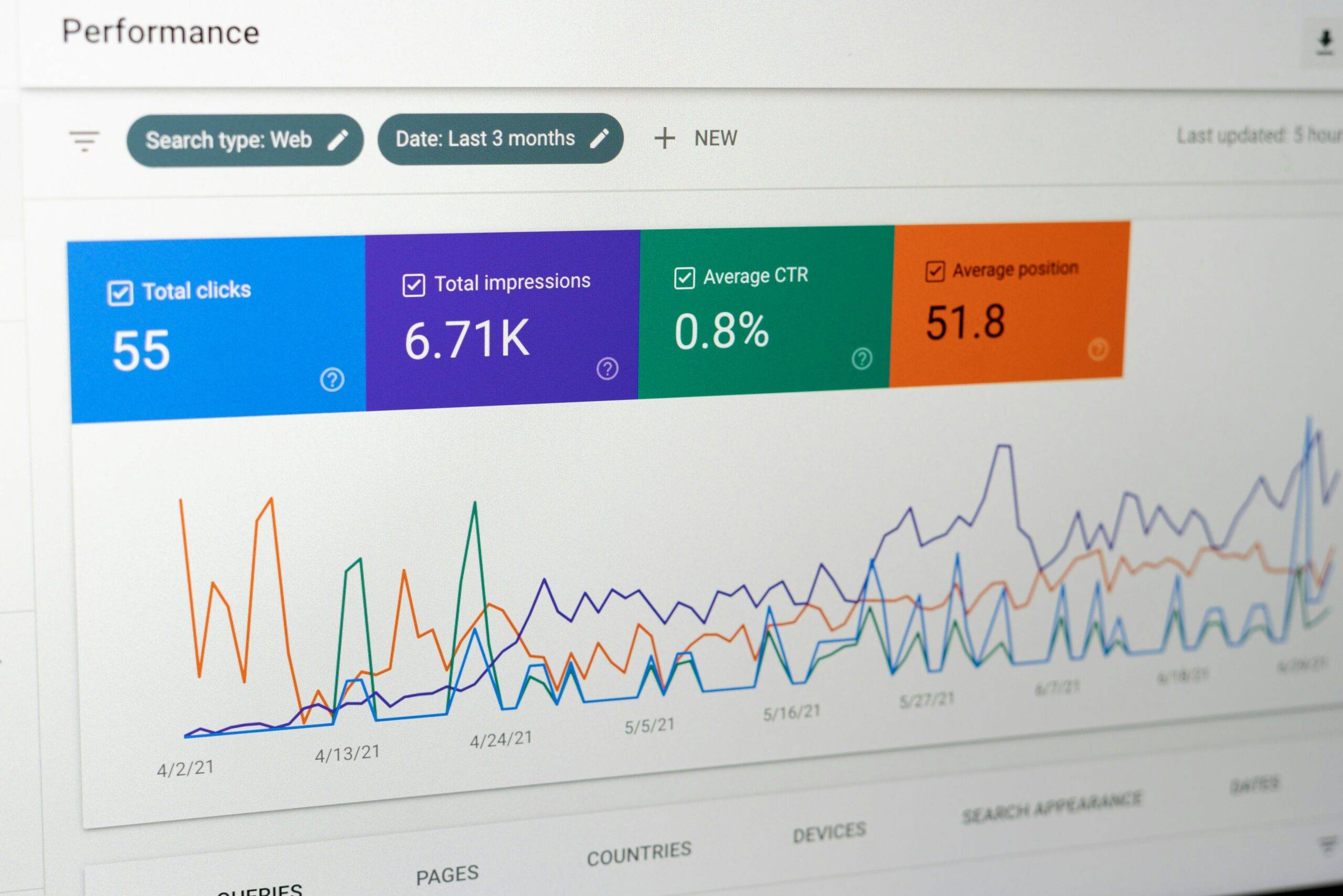
To effectively enhance your Google Ads CTR, closely monitoring your performance metrics is crucial. Key indicators include Click-Through Rate (CTR), Cost per Click (CPC), conversion rate, and Quality Score. Tracking these metrics clearly shows how your ads resonate with your target audience. Use Google Ads’ built-in analytics tools to check these parameters regularly. Observing trends over time helps identify what aspects of your ad campaigns are working and what needs refinement.
Making data-driven decisions for optimization
Once you comprehensively understand your performance metrics, use this data to make informed decisions. Analyzing data allows you to spot successful elements of your campaigns that can be replicated and expanded upon. For instance, if certain keywords generate a higher CTR, consider increasing your bid on those keywords or optimizing ad copy around them. Additionally, data can reveal underperforming aspects that might benefit from a different approach or need to be paused to allocate budget more effectively.
Adjusting campaigns based on performance data
Responsive adjustments are key to maintaining and improving ad performance. Based on your data analysis:
– Refine or replace low-performing ads.
– Adjust bids to optimize expenditure while improving CTR.
– Experiment with different ad formats and extensions to enhance visibility and relevance.
Regularly updating your campaigns according to performance data keeps your strategy aligned with your marketing goals and combats ad fatigue among your audience. This proactive approach to tweaking your ads ensures ongoing optimization and better overall results in your Google Ads efforts.
Conclusion
In the ever-evolving world of digital marketing, optimizing your Google Ads for better CTR is not just beneficial; it's essential. You can significantly improve your click-through rates by utilizing targeted keywords, crafting compelling ad copy, embracing ad extensions, refining your bidding strategies, and testing and tweaking based on performance data. Remember, the goal is to attract clicks and ensure that these clicks lead to valuable customer engagements. Stay diligent, stay testing, and keep your strategies dynamic to make the most of your Google Ads campaigns. With these practices in place, you're on your way to boosting your CTR and achieving greater success in your advertising efforts.