Introduction
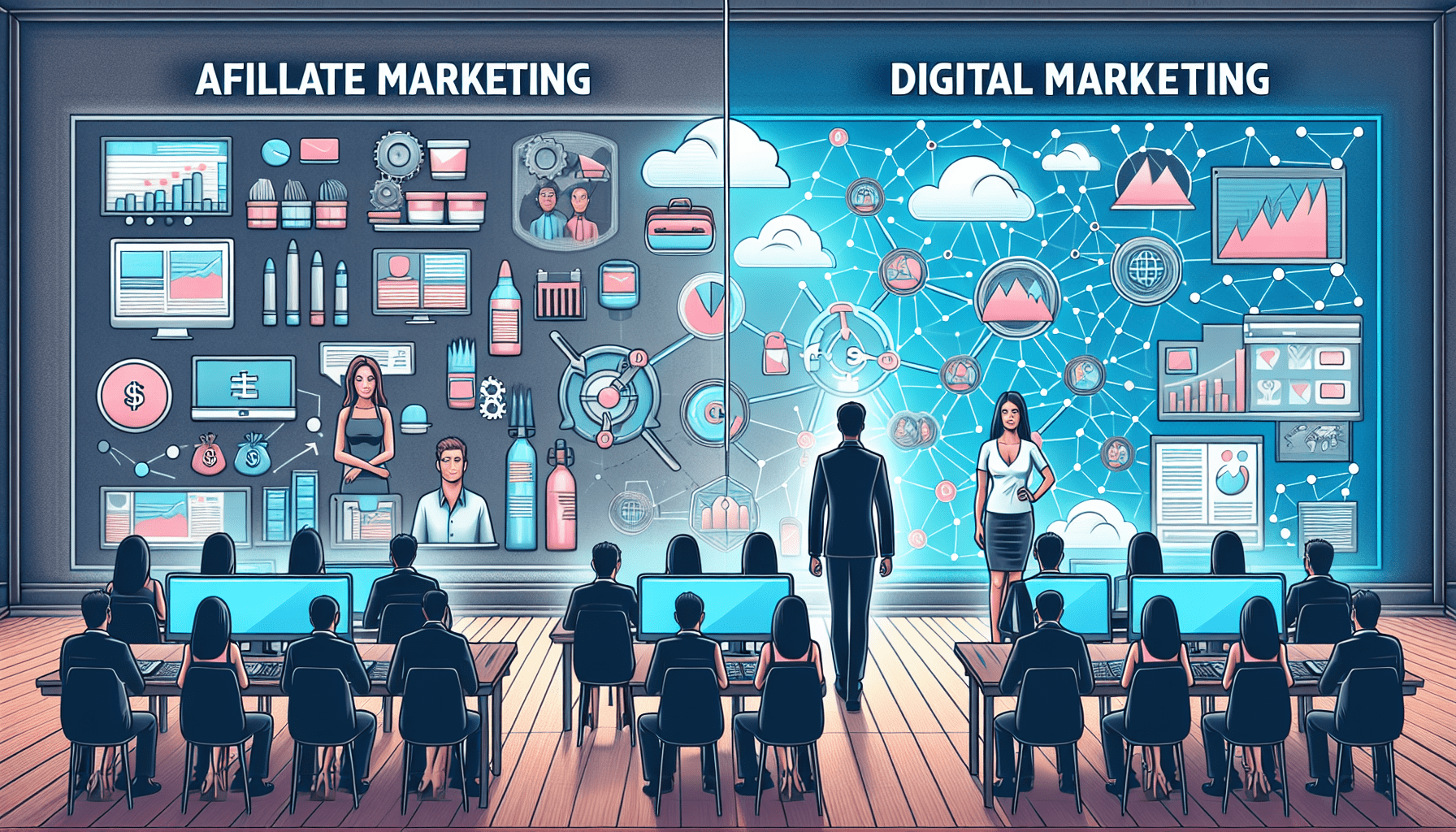
Affiliate and digital marketing are often spoken of interchangeably, but the two terms represent distinct concepts within online advertising. Both are pivotal for businesses seeking to thrive in the digital economy, yet they cater to different marketing needs and follow other strategies. We'll dive into the key differences between affiliate marketing and digital marketing, shedding light on how each function and how businesses can effectively leverage them to maximize their online presence and profitability. Understanding these differences is crucial for anyone looking to refine their online marketing strategies and optimize their marketing investments.
Understanding Affiliate Marketing
Definition and Concept
Affiliate marketing is an online sales tactic that lets a product owner increase sales by allowing others targeting the same audience—affiliates—to earn a commission by recommending the product to others. At the same time, it makes it possible for affiliates to earn money on product sales without creating their products. Affiliate marketing involves referrals where an affiliate earns a commission for marketing another person's or company's products. The affiliate searches for a product they enjoy then promotes it and earns a profit from each sale they make. Sales are tracked via affiliate links from one website to another.
Key Strategies
Affiliate marketing strategies revolve around the promotion and tracking of affiliate links. Here are some key strategies used by successful affiliates:
- Content Marketing: Creating and publishing high-quality content that includes affiliate links. For example, blog posts, videos, and reviews aim to inform and subtly promote products.
- Email Marketing: Building an email list to promote affiliate products directly through email campaigns. This direct form of interaction can yield high conversion rates if managed carefully.
- SEO: Optimizing content to appear higher in search engine results ensures more visibility for the affiliate links.
- Pay-Per-Click (PPC) Advertising: Investing in PPC campaigns to drive traffic to affiliate products. These ads can be targeted very specifically to reach potential buyers.
- Social Media Marketing: Using platforms like Facebook, Instagram, and Twitter to promote affiliate links within posts and profiles.
When executed well, these strategies can lead to significant earnings for affiliates and increased sales for product owners.
Exploring Digital Marketing
Definition and Scope
Digital marketing is a broad term that encompasses all marketing efforts that use an electronic device or the internet. Businesses leverage digital channels such as search engines, social media, email, and other websites to connect with current and prospective customers. In contrast to affiliate marketing, digital marketing doesn't primarily rely on partnerships to generate sales. Instead, it focuses on direct strategies to attract, engage, and convert audiences in digital environments. The scope of digital marketing can range from digital advertisements, email, and social media campaigns to building websites and engaging across various digital interfaces.
Popular Tools and Channels
The efficacy of digital marketing heavily relies on the tools and channels utilized to execute strategies. Some of the most popular include:
- Search Engine Optimization (SEO): Tools like Google Analytics, Ahrefs, and SEMrush help optimize website content to improve visibility in search engine results.
- Content Management Systems (CMS): Platforms like WordPress and Joomla allow marketers to create, manage, and modify website content without specialized technical knowledge.
- Social Media Platforms: Tools such as Hootsuite and Buffer assist in scheduling posts, analyzing social media traffic, and managing multiple accounts simultaneously.
- Email Marketing: Mailchimp and Constant Contact provide platforms for sending bulk emails and efficiently managing subscriber lists.
- Pay-Per-Click (PPC) Advertising: Google Ads and Bing Ads are examples of platforms that facilitate running ad campaigns on various digital channels.
Each tool and channel serves a specific purpose in the broad spectrum of digital marketing and helps businesses differently depending on their marketing goals.
Impact on Business Growth
Digital marketing has a profound impact on business growth. It gives businesses the tools to reach a larger audience, directly communicate with potential and existing customers, and drive more sales. The measurable nature of digital marketing allows businesses to analyze the effectiveness of their campaigns and adjust strategies accordingly to improve results. With the ability to gauge customer behavior and preferences, companies can tailor their offerings to better meet their market's needs, improving customer satisfaction and retention. Digital marketing helps acquire new customers and maintain a robust and engaging relationship with existing ones, fostering business growth in both short-term and long-term strategies.
Key Differences Between Affiliate Marketing and Digital Marketing

Cost-Effectiveness
Affiliate marketing is often cost-effective because businesses only pay for results, typically sales or leads. This performance-based model minimizes the risk of paying for ads that do not convert, making it an attractive option for many businesses, especially startups with tighter budgets. In contrast, digital marketing might involve upfront costs for strategies like pay-per-click (PPC), social media ads, or content creation without guaranteeing sales. Although digital marketing offers broader activities that might require larger budgets, the spending can be controlled and is scalable according to business needs.
Control and Management
Control and management differ significantly between affiliate marketing and digital marketing. With affiliate marketing, control over the brand messaging can be somewhat limited as affiliates create and push their copy to promote your products or services. While you can provide guidelines, policing every affiliate's approach can be challenging. Digital marketing, however, allows companies to maintain strict control over their brand’s image and messaging throughout the campaign. This involves controlling the advertisements' distribution, targeting, and creative aspects.
Targeting and Reach
The reach and targeting capabilities of affiliate marketing and digital marketing also vary greatly. Affiliate marketing leverages the audiences of individual affiliates, who might be highly specialized or influential in specific niches. This can provide access to a highly engaged, targeted audience but may limit broader market exposure. In digital marketing, advanced tools and analytics are used for precise targeting and retargeting of users based on demographics, interests, behaviors, and more. This helps tailor campaigns to reach a broader or more diverse audience across various online platforms, maximizing visibility and engagement.
Revenue Generation Models
Affiliate marketing primarily operates on a commission-based revenue model, where affiliates earn a percentage of their sales. This can include pay-per-click, pay-per-lead, or pay-per-sale. Such models are highly attractive to businesses and affiliates as they ensure that marketing efforts directly correlate to revenue. Digital marketing encompasses a broader spectrum of revenue models, including advertising, selling digital products, subscriptions, and more. It allows businesses to generate income through diversified channels and not solely dependent on sales commissions, enhancing their ability to scale and stabilize their income streams.
Which One to Choose for Your Business?

Considerations for Selecting the Right Approach
Choosing between affiliate marketing and digital marketing depends on several factors specific to your business objectives, market conditions, and available resources. If budget constraints exist and a low-risk model is preferable, affiliate marketing might be the way to go. It's also a viable choice if your product or service fits well into popular niches that affiliates target. Conversely, digital marketing might be more appropriate if you aim to build a comprehensive online presence, exert complete control over your campaigns, and target customers through varied channels. Consider your long-term business goals, the nature of your product or service, and your target audience before deciding on a strategy.
Integrating Both Strategies for Maximum Results
For many businesses, blending affiliate and digital marketing can lead to synergistic effects and maximize overall marketing effectiveness. By integrating both strategies, you can leverage the broad reach and precise targeting of digital marketing while benefiting from the cost-effectiveness and performance-based aspects of affiliate marketing. This approach allows you to diversify your marketing efforts, tap into different revenue streams, and appeal to different audience segments. Strategies like digital marketing to strengthen brand awareness and affiliate marketing to drive conversions can be particularly effective. Begin by assessing your current marketing performance, identify areas for improvement, and gradually integrate these strategies to align with your overall business objectives.
Conclusion
While affiliate marketing and digital marketing are indispensable tools in the modern advertiser’s toolkit, they serve different functions and achieve results through different mechanisms. Affiliate marketing focuses on partnerships and performance-based rewards, making it ideal for businesses looking to expand their reach through a network of promoters. Digital marketing, on the other hand, is all-encompassing, using various strategies to engage customers across the digital landscape directly. Understanding these key differences can help marketers choose the right approach for their goals, ensuring more tailored and effective marketing efforts. Whether you lean towards developing an affiliate network or crafting comprehensive digital campaigns, the success of your marketing efforts will largely depend on how well you understand and implement these distinct strategies.